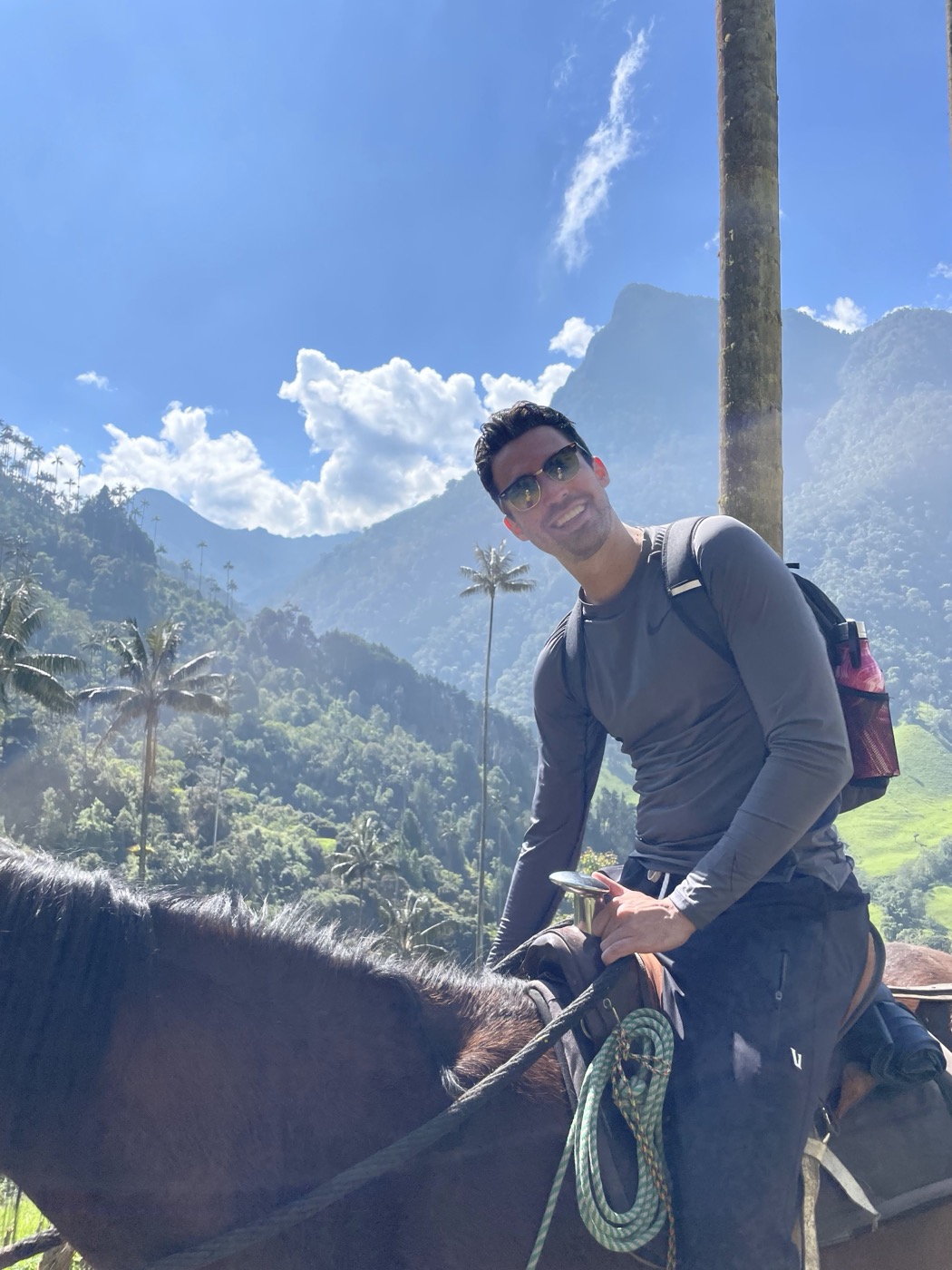
The first time I went to Colombia, I had a one-year Duolingo streak and almost nothing else. I figured a year of green owls had to count for something.
It did not. I could recognise words on a screen and produce almost none of them out loud. Ordering coffee was a struggle, a real conversation out of the question. Duolingo had trained me to recognise answers, not speak (chasing a streak rewards exactly the wrong skill), and standing there unable to say a sentence made that painfully obvious.
So I came home and decided to learn it for real. About 830 hours later, I went back to Colombia, and kept going: Costa Rica, Mexico City, Peru. This time I could actually talk to people. That's the whole arc, and here's exactly what changed between those two trips.
In this post I'll walk you through the exact method and resources I used, and how to apply the same playbook to French. In a hurry? Jump to the routine.
The numbers
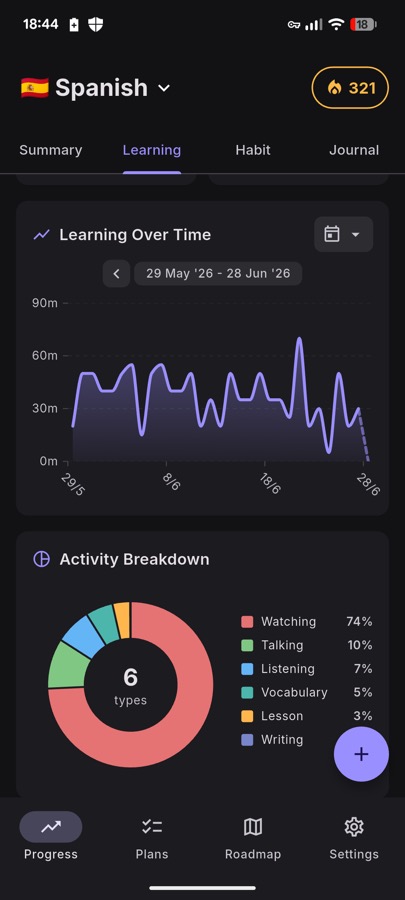
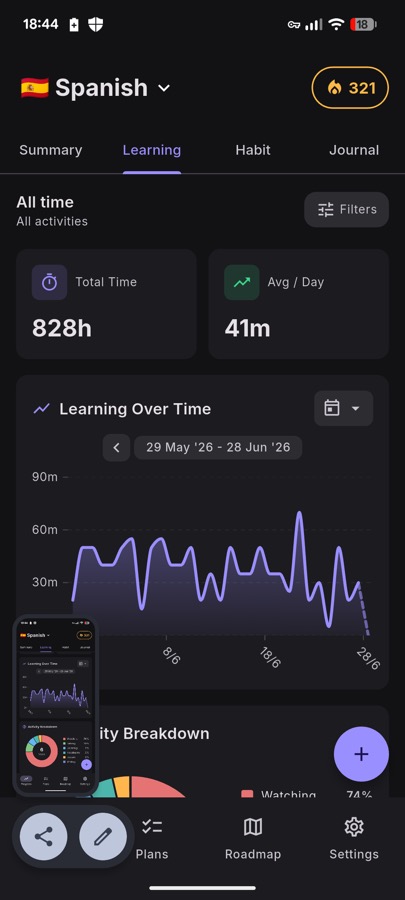
Over three years, deliberately:
- 830 hours of learning
- 41 minutes a day on average
- 85% input, 15% output
- A wasted year of Duolingo before any of it (we don't count those)
No magic. Just 41 minutes a day, and being careful about what those minutes were.
The thing that changed everything
The real turning point wasn't an app. It was learning what comprehensible input is, the idea that you acquire a language mostly by understanding messages slightly above your level, not by memorising rules. The moment it clicked, I realised that's exactly how I'd learned English as a kid: not in class, but through TV shows and video games, hours and hours of understandable, interesting content. I'd already done this once without knowing it had a name. So I rebuilt my Spanish routine around it on purpose. (New to the idea? Start with this primer on the Dreaming Spanish method, and comprehensible input vs CEFR if you care about levels.)
The routine that worked
- ~45 minutes of comprehensible input, content at a level where I understood most of it without translating. The engine, and the bulk of the 85%.
- 1 hour a week with a tutor on Preply. Awkward early, indispensable later, most of the 15% output. Speaking weekly forces recall no app can.
- ~15 minutes of targeted conjugation drills, only the verb forms I kept fumbling, not grammar broadly.
The three pieces work together: input builds your foundation, speaking pushes you to produce, and grammar drills clean up the verbs you keep getting wrong. That's the whole system, and 830 hours of it is what turned a miserable first trip into a confident second one.
How I layered it in, one piece at a time
That three-part routine is the destination, not the starting line. I didn't do all three from day one, that would have buried me. I added each piece only once the previous one had a foundation to stand on. Here's the actual order.
- The first 80–100 hours: input only, nothing else. I started with the easiest content I could find and understand, beginner videos aimed at total newcomers, pitched just slightly above my level. No drills, no speaking, no grammar. Just hours of understanding messages until the sounds stopped being noise. This is the phase most people skip, and it's the one that makes everything after it work.
- After that: added verb drills to cement what input was teaching me. Once I'd heard the same conjugations enough times that patterns started surfacing on their own, I layered in ~15 minutes of targeted drills to lock them down. Crucially, the drills came after input had introduced the forms, not before. I was cementing recognition into production, not memorising cold tables.
- Around 300 hours in: started weekly speaking, once I could follow along. I waited until I could actually understand a conversation before trying to hold one. The first tutor sessions were still awkward, but I had something to draw on, so recall had a fighting chance instead of starting from zero.
- Throughout: input never stopped, the content just kept getting harder. Comprehensible input stayed the engine the entire way, I just kept nudging the difficulty up as I improved. The graded beginner videos gave way to intermediate content, then to real TV, podcasts, and YouTube made for native speakers, no subtitles, ever. This is where the hours really pile up, and where travel conversations finally clicked.
The resources I actually used
Same three-part system, whichever language you're learning. Here's the French stack, with the Spanish tools I used for reference. (The conjugation tool, Bonjour Verbs, is the one I built: typed, not multiple choice, aimed at the exact tense you keep missing.)
| Step | Frenchstart here | Spanishwhat I used |
|---|---|---|
| Input | Dreaming French | Dreaming Spanish |
| Conjugation drills | Bonjour Verbs | Ella Verbs |
| Speaking | Preply* | Preply |
* 70% off your first Preply lesson, redeemable through Bonjour Verbs.
What I'd tell my past self
- Consistency beats intensity. 41 minutes a day for years beat any cram. Show up daily, even when it's 10 minutes.
- Stay at the right level. Content you understand ~80% of is gold. Too hard and you tune out; too easy and you stall.
- Skip the subtitles. They turn listening practice into reading practice. I never used them, and my ear was better for it.
- Make it fun or you'll burn out. Pick shows, games, and topics you'd enjoy in your own language. Boredom is the real failure mode.
- Wait to speak until you've listened enough, then never stop. Cramming output too early is painful and slow. Once you start, keep a weekly tutor forever.
- Swap your day into the language. A YouTube workout? Do the French one. Cooking? Use a French recipe site. New show? Make it a French one. Free hours, zero extra time.
The bottom line
Three years ago I couldn't order coffee in Spanish despite a year of streaks. Today I can travel four countries and actually talk to people. Nothing about that was magic, just 41 minutes a day, pointed at the right things. Pile up the input, start speaking once you can follow along, drill the verbs that trip you up, and show up daily for the language, not for the streak. If you're doing French, the resources above are exactly where I'd start.
— Émile
FAQ
How many hours does it take to learn a language?
I logged 830 hours over three years to talk confidently with locals while travelling, about 41 minutes a day. Comprehensible-input research and FSI estimates put solid conversational ability in the 600–1,000 hour range, so 830 real hours tracks.
What's the best way to learn as an adult?
Heavy input, light output, about 85/15. Around 45 min of comprehensible input daily, one hour a week speaking with a tutor, and short drills on your weak spots. Input builds understanding; output and drills clean up what input alone leaves messy.
Is Duolingo enough?
No. I spent a year on it and could barely hold a conversation. Streaks reward recognition, not production. Real progress came from input, weekly speaking, and targeted drills.